
QuantaDose Press Releases
Current RF Exposure Limits Are Not Supported by the Animal Cancer and Reproductive Evidence
Mar
A synthesis of the selected literature shows that the thermal-only regulatory model is not aligned with the strongest available animal, mechanistic, reproductive, and child-exposure evidence.
Executive Summary
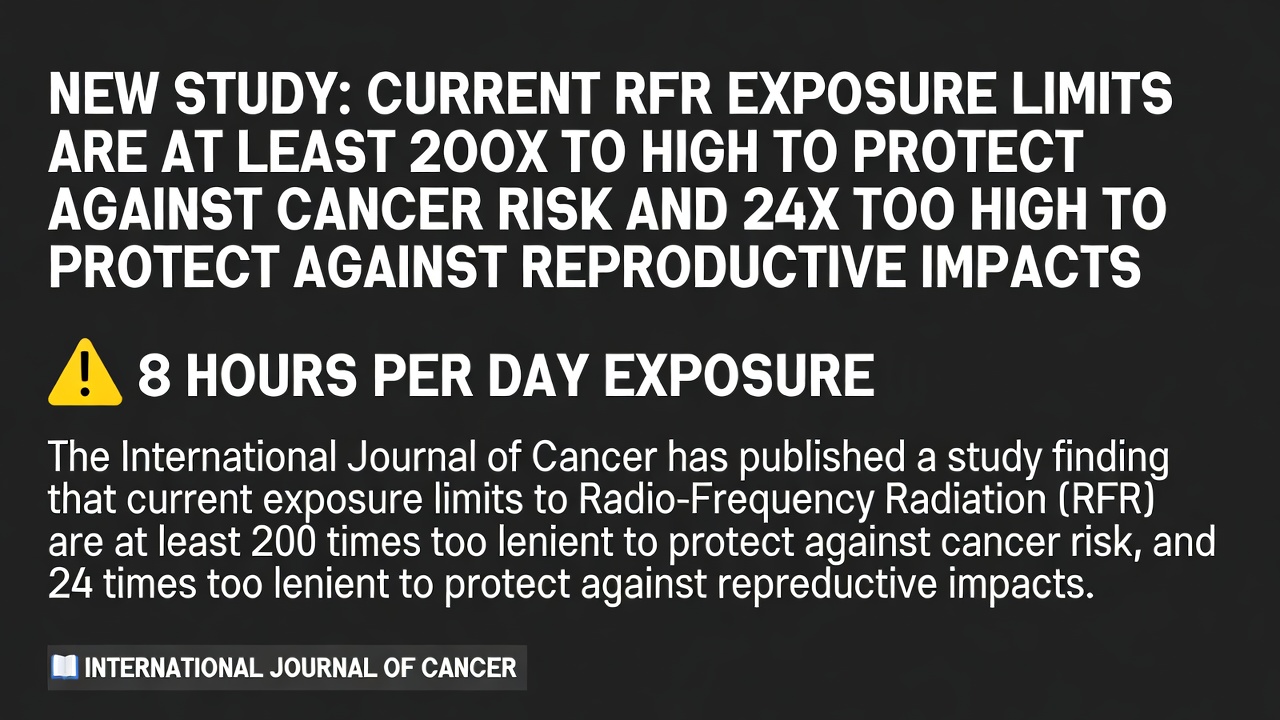
The central finding across this body of evidence is straightforward: current public radiofrequency (RF) exposure limits are not anchored to the best available evidence on cancer risk and reproductive toxicity. The clearest expression of that conclusion comes from the 2026 Environmental Health risk-assessment paper, which used benchmark-dose methods applied to WHO-commissioned animal evidence and derived health-protective whole-body SAR levels in the milliwatt-per-kilogram range. Those estimates were far below the current public whole-body limit of 0.08 W/kg. This is not a marginal discrepancy. It is a direct indication that existing limits were not designed around the animal cancer and fertility evidence now available.
That conclusion is strengthened by the animal carcinogenicity literature itself. The 2025 systematic review of 52 laboratory animal studies judged the evidence for increased glioma and malignant heart schwannoma in male rats to be high certainty. That matters because these are not isolated positive findings from a single laboratory. The two most important long-term bioassays in the selected evidence—the U.S. National Toxicology Program (NTP) study and the Ramazzini Institute study—reported convergent tumor signals involving the same organ systems: heart schwannomas and brain glial tumors. The exposure systems differed, the study designs differed, and yet the tumor pattern converged.
The NTP report is especially important because it was a large, long-term toxicology and carcinogenesis study with prenatal initiation, multiple exposure groups, and validated exposure engineering. It found clear evidence of malignant schwannoma of the heart and some evidence of malignant glioma of the brain in male rats. The Ramazzini study, using far-field 1.8 GHz GSM exposure intended to model base-station-like environmental emissions from prenatal life until natural death, also found a statistically significant increase in heart schwannomas in male rats at the highest exposure. A later molecular pathology study of Ramazzini tumors found that the rat gliomas shared at least partial genetic and histologic resemblance to human glioma-relevant patterns, supporting translational relevance rather than dismissing the tumors as biologically idiosyncratic rodent artifacts.
The reproductive evidence is also too strong to fit comfortably inside a thermal-only safety framework. The 2025 corrigendum to the systematic review on male fertility upgraded the certainty of evidence that RF-EMF exposure in males reduces pregnancy rate when exposed males are mated to high certainty. That is a direct reproductive endpoint, not merely a laboratory surrogate. The same review framework also reported lower-certainty evidence for reduced sperm count, reduced sperm vitality, and increased sperm DNA damage. The 2026 risk-assessment paper then translated this reproductive evidence into protective exposure estimates that were again well below current public limits.
Mechanistically, the selected literature converges most strongly on oxidative stress. The 2016 review reported oxidative effects in 93 of 100 peer-reviewed studies of low-intensity RF radiation. The 2022 synthesis similarly reported statistically significant oxidative effects in 124 of 131 RF studies and 36 of 39 ELF studies. Across these reviews, the recurring findings include reactive oxygen species generation, peroxidation, oxidative DNA damage, and altered antioxidant enzyme activity. This is not a scattered set of unrelated endpoints. It is a repeated upstream biological pattern that can plausibly connect DNA damage, reproductive injury, and broader tissue dysfunction.
A 2025 mechanistic review extends that pattern by proposing dysregulation of voltage-gated ion channels, especially through ELF/ULF modulation and pulsing characteristics of anthropogenic fields, as a unifying initiating event that drives ROS overproduction and oxidative stress. Within the selected evidence, this mechanism should be treated as a coherent interpretive framework rather than settled fact. But it is important because it offers a biologically organized explanation for why non-thermal exposures can produce measurable effects across multiple systems without requiring bulk tissue heating.
The human evidence in this set is not as strong as the animal evidence for causation, but it points in the same direction. A 2025 cohort study of 1,666 women found that longer cell phone call duration during pregnancy was associated with miscarriage and adverse birth-size outcomes. A child dosimetry modeling study found substantially higher localized RF absorption in younger brains and eyes than in adults, indicating that adult-male phantom-based compliance testing can underestimate pediatric exposure. These findings do not by themselves prove disease causation in children or pregnancy, but they directly undermine the assumption that current testing paradigms are adequately protective for developing biology.
Taken together, the selected evidence supports a concern stance with high overall evidentiary weight. The strongest support comes from convergent animal carcinogenicity findings, high-certainty reproductive evidence in animals, repeated oxidative-stress findings across mechanistic reviews, and a formal 2026 risk assessment showing that current limits are not health-protective if those data are taken seriously. The public-health implication is plain: exposure standards built around short-term heating are not sufficient to address chronic, low-intensity, biologically active RF exposures.
Introduction
The central question addressed by this literature is whether current RF exposure limits are scientifically adequate to protect against biologically important harms beyond short-term tissue heating. The selected evidence does not revolve around a single study type. It includes formal risk assessment, long-term animal carcinogenicity studies, systematic reviews of animal cancer and male fertility, mechanistic reviews centered on oxidative stress, human observational evidence in pregnancy, child dosimetry modeling, and policy analyses of regulatory adequacy.
When these lines of evidence are considered together, the issue is no longer whether RF standards prevent acute thermal injury. They do. The real question is whether those standards also protect against chronic, low-intensity, non-thermal biological effects relevant to cancer, reproduction, and development. The selected evidence indicates that they do not.
The most important reason is structural. Current public limits are compared in the 2026 risk-assessment paper against exposure levels derived from animal evidence on cancer and male reproductive toxicity. The resulting protective estimates are substantially lower than existing limits. That means the regulatory framework is not merely incomplete at the margins; it is misaligned with the hazard evidence used in the analysis.
This review synthesizes the selected literature into a single narrative focused on what the evidence actually shows: where the signal is strongest, what mechanisms recur, how the animal and mechanistic findings fit together, and what this means for public-health protection, especially for children, pregnancy, and fertility.
Integrated Evidence Synthesis
Carcinogenicity: the strongest direct challenge to current limits
The most consequential evidence in this set comes from the animal cancer literature. The 2025 systematic review of RF-EMF cancer in laboratory animals evaluated 52 studies, including 20 chronic bioassays, using formal risk-of-bias and certainty methods. Its conclusion was not vague. It found high-certainty evidence for increased glioma and malignant heart schwannoma in male rats after RF-EMF exposure. Moderate-certainty evidence was also reported for lymphoma, adrenal pheochromocytoma, hepatoblastoma, and lung neoplasms.
That high-certainty conclusion is anchored largely by the two major lifetime rodent programs represented here. The NTP technical report found clear evidence of malignant schwannoma of the heart and some evidence of malignant glioma of the brain in male rats exposed to GSM- and CDMA-modulated 900 MHz cell phone radiation. Exposure began before birth and continued long term. The report also notes that tumor counts did not increase monotonically with SAR, with signals present at 1.5 W/kg as well as higher doses. That non-monotonicity matters because it does not fit a simplistic heat-dose model.
The Ramazzini Institute study provides independent support under a different exposure scenario. Rats were exposed from prenatal life until natural death to a 1.8 GHz GSM far-field field intended to represent base-station environmental emissions. In male rats, heart schwannomas were significantly increased at the highest exposure. Brain glial tumors and Schwann cell hyperplasia were also elevated, though not statistically significant in the abstracted summary. The importance of this study is not that every endpoint reached significance. It is that a second large lifetime study, using a different exposure geometry and lower-intensity environmental-style exposure, pointed to the same tumor systems as the NTP study.
The 2024 molecular profiling follow-up adds a translational layer. It did not test incidence, but it examined whether the rat tumors resembled human disease. The reported histologic similarity of rat gliomas to human low-grade gliomas, along with partial overlap between rat tumor mutations and homologous human cancer-gene alterations in COSMIC, argues against dismissing these tumors as irrelevant rodent curiosities. The overlap is incomplete, and the targeted panel was limited, but the direction is important: the tumors show at least partial biological continuity with human oncogenic patterns.
Human evidence in this selected set is weaker and more indirect. The INTERPHONE paper included here is a design and methods paper, not a results paper, so it cannot be used to claim a specific risk estimate. The Danish registry item is ecological trend evidence and cannot establish RF causation. The below-waist colorectal cancer abstract is hypothesis-generating only. None of these human items carry the causal weight of the animal evidence. But they are not needed to establish the central point. The strongest direct challenge to current limits already comes from the animal carcinogenicity evidence and the systematic review that judged it high certainty.
Reproductive toxicity and fertility: no longer a peripheral concern
The reproductive evidence in this set is unusually important because it moves beyond sperm-quality proxies to actual reproductive success. The 2025 corrigendum to the systematic review on male fertility upgraded the certainty that RF-EMF exposure in males reduces pregnancy rate when exposed males are mated to high certainty. That is a major finding. A reduced pregnancy rate is a functional reproductive outcome, not merely a biomarker.
The same review framework also reported low-to-moderate certainty evidence for reduced sperm count, reduced sperm vitality, and increased sperm DNA damage. Even where certainty is lower for these secondary endpoints, the pattern is coherent: impaired sperm quality and increased DNA damage align with the stronger finding of reduced successful mating outcomes.
The 2026 risk-assessment paper then translated this reproductive evidence into exposure-limit implications. It estimated male fertility-protective whole-body SAR levels at roughly 3.3-10 mW/kg, again well below the current public whole-body limit of 0.08 W/kg. This is one of the clearest policy-relevant findings in the entire set. It means that if the animal reproductive evidence is accepted, current limits are not calibrated to protect male fertility.
Human evidence in pregnancy points in the same direction, though with the usual observational limitations. The Yazd cohort study of 1,666 women found that longer cell phone call duration during pregnancy was associated with miscarriage, abnormal birth weight, and abnormal newborn height. Cordless phone use was also associated with abnormal birth weight, while Wi-Fi findings were weaker or mixed. Because exposure was based on device-use metrics rather than direct dosimetry, and because residual confounding cannot be excluded, this study cannot establish causation. But it is directionally consistent with the broader concern that pregnancy and fetal development are not adequately represented in current safety assumptions.
Oxidative stress and redox disruption: the most consistent mechanistic pattern
Among the mechanistic themes in the selected evidence, oxidative stress is the most consistently supported. The 2016 review reported that 93 of 100 peer-reviewed studies on low-intensity RF radiation found oxidative effects. The 2022 synthesis reported statistically significant oxidative effects in 124 of 131 RF studies and 36 of 39 ELF studies. Across both reviews, the recurring endpoints include reactive oxygen species generation, activation of oxidative pathways, peroxidation, oxidative DNA damage, and altered antioxidant enzyme activity.
This pattern matters because it provides a common upstream biology that can connect otherwise diverse downstream outcomes. Oxidative stress is relevant to carcinogenesis through DNA damage and altered signaling. It is relevant to reproduction through sperm membrane vulnerability, DNA integrity, and mitochondrial function. It is relevant to development because rapidly growing tissues are especially sensitive to redox imbalance.
The selected evidence does not provide a single definitive exposure-response curve for oxidative injury across all frequencies and modulations. It does, however, show repeated positive findings across a large body of experimental literature at low-intensity, non-thermal exposure levels. That is enough to reject the claim that biological activity below thermal thresholds is unsupported.
DNA damage and genomic relevance
The oxidative-stress reviews explicitly include oxidative DNA damage among the recurring findings. The male fertility review also reports increased sperm DNA damage. These are not interchangeable endpoints, but together they indicate that RF-EMF exposure is associated in the cited literature with damage relevant to genomic integrity.
The 2024 genetic profiling study adds a different kind of genomic relevance by showing that tumors arising in RF-exposed rats contain alterations overlapping, at least in part, with homologous human cancer-gene changes. This does not prove a unique RF mutational signature. The authors themselves note that overlap is partial and that distinct mutational patterns could still reflect similar etiology through different mechanisms. But the study strengthens the argument that the observed animal tumors are biologically meaningful and not merely histopathologic anomalies without human relevance.
Child vulnerability and exposure underestimation
The child dosimetry modeling study is not a health-outcome study, but it is highly relevant to protection standards. Using anatomically based models, it found substantially higher localized RF absorption in younger brains and eyes than in adults, with roughly two- to three-fold higher doses in some regions. The study argues that adult-male phantom-based compliance testing may underestimate pediatric exposure.
This is a critical regulatory point. If children absorb more localized energy in vulnerable tissues than the compliance model assumes, then a standard that appears compliant on paper may not be equally protective across age groups. The policy review in the selected evidence reinforces this concern by noting that children have thinner skulls, more conductive tissues, and deeper absorption into developing brain regions. The dosimetry study provides the quantitative support for that concern.
The implication is not merely that children are smaller adults. It is that the exposure model used for compliance can systematically miss age-related heterogeneity in local dose distribution. That weakens confidence in blanket assurances that current limits are protective for children.
Non-thermal mechanisms and the failure of the thermal-only model
The selected evidence repeatedly points beyond a thermal-only interpretation. The oxidative-stress reviews focus on low-intensity exposures. The 2025 mechanistic review argues that biologically relevant features of anthropogenic EMFs include polarization, coherence, modulation, pulsing, and variability, and proposes the IFO-VGIC framework in which voltage-gated ion channel dysregulation leads to ROS overproduction and oxidative stress.
Within this evidence set, that mechanistic model should be described carefully. It is a proposed unifying mechanism from a narrative review, not a definitive settled pathway established by a single decisive experiment. But it is coherent with the repeated oxidative findings and with the observation that biological effects can occur under exposure conditions not explained by bulk heating.
The NTP report also contributes indirectly to this point. The provided summary notes that pilot work kept core temperature increase below 1°C at the highest exposure, and the tumor pattern was non-monotonic rather than tracking a simple heat-dose relationship. That does not by itself prove a specific non-thermal mechanism, but it weakens the argument that the observed carcinogenic findings can be dismissed as straightforward thermal artifacts.
Regulatory and ecological context
The policy review on U.S. wireless regulation argues that the current framework is outdated, fragmented, and centered on short-term thermal effects rather than chronic low-intensity exposure. It highlights gaps in premarket testing, post-market surveillance, real-world compliance, occupational monitoring, and protection of children, pregnancy, and wildlife. This is not primary biological evidence, but it accurately frames the mismatch between the evidence base and the regulatory model represented in the selected studies.
The wildlife/ecosystem review extends the concern beyond human health, arguing that low-intensity ambient EMF exposures can disrupt orientation, migration, mating, and other critical functions in nonhuman species. This evidence is secondary and heterogeneous, but it reinforces a broader point: standards designed around preventing acute heating in adult humans are not equivalent to standards designed to protect complex biological systems under chronic ambient exposure.
Mechanistic Interpretation
The most coherent mechanistic interpretation supported by the selected evidence is that low-intensity RF-EMF can act as a biologically active stressor that perturbs cellular redox balance, producing reactive oxygen species, lipid peroxidation, oxidative DNA damage, and altered antioxidant defenses. This oxidative-stress pattern is the most repeatedly observed upstream process in the selected literature.
The 2025 mechanistic review proposes a more specific initiating pathway: dysregulation of voltage-gated ion channels driven by the ELF/ULF modulation, pulsing, variability, polarization, and coherence characteristics of anthropogenic fields. In that framework, altered ion-channel behavior disrupts intracellular ionic homeostasis and activates ROS-generating systems, leading to oxidative stress and downstream pathology.
The value of this interpretation is that it unifies otherwise diverse findings. In cancer, oxidative stress and DNA damage provide a plausible route to genomic instability and altered signaling. In male reproduction, oxidative injury and DNA damage provide a plausible route to reduced sperm vitality, reduced sperm count, and lower pregnancy success. In pregnancy and development, redox disruption offers a plausible route to adverse gestational and growth outcomes. In children, higher localized absorption in developing tissues increases concern that the same upstream biology could operate under greater local dose conditions than adult compliance models predict.
The evidence here is strongest for oxidative stress as a recurring mechanism and more interpretive for the specific VGIC-centered initiating model. But the overall mechanistic picture is internally consistent: repeated non-thermal biological activity, centered on redox disruption, can plausibly connect the animal cancer findings, reproductive findings, and developmental concerns.
Weight of Evidence
The evidence is strongest in three areas.
First, animal carcinogenicity. The 2025 systematic review judged the evidence for glioma and malignant heart schwannoma in male rats to be high certainty. That conclusion is supported by convergent findings from the NTP and Ramazzini lifetime studies.
Second, male reproductive toxicity. The 2025 corrigendum upgraded the evidence that male RF-EMF exposure reduces pregnancy rate in animal mating studies to high certainty. This is a direct functional reproductive endpoint.
Third, oxidative-stress mechanisms. Two major reviews reported oxidative effects in the large majority of included low-intensity RF studies, making oxidative stress the most consistent mechanistic signal in the selected evidence.
The evidence is moderate but important for pregnancy outcomes in humans, child-specific dosimetry, and the proposed VGIC-centered mechanistic framework. These lines do not carry the same causal weight as the animal cancer and fertility evidence, but they reinforce the same direction of concern and expose weaknesses in current protection assumptions.
The evidence is weaker for ecological registry trends, the colorectal cancer pilot abstract, and funding-bias analyses as direct proof of harm. These items are contextual. They may support concern about under-recognition, research bias, or emerging hypotheses, but they should not be used as the main basis for causal claims.
Overall, the weight of evidence in this selected set supports the conclusion that non-thermal biological effects are supported, that current exposure limits are directly challenged by animal cancer and reproductive data, and that the regulatory framework is not aligned with the strongest available evidence.
Public Health and Regulatory Implications
The public-health implication of this evidence is clear: RF exposure limits based primarily on preventing short-term heating are not sufficient to protect against the harms identified in the animal cancer and reproductive literature.
The 2026 risk-assessment paper is the most direct statement of that problem. By deriving health-protective whole-body SAR estimates from animal cancer and male fertility evidence, it shows that current public limits are substantially too high if those endpoints are taken seriously. That is not a theoretical concern. It is a quantitative demonstration of regulatory under-protection relative to the selected evidence base.
For cancer, the implication is that standards should not assume absence of risk below current thermal thresholds. For reproduction, the implication is that male fertility protection requires lower exposure targets than current public limits provide. For pregnancy, the human cohort evidence and the broader reproductive findings support precautionary reduction of avoidable exposure during gestation. For children, the dosimetry evidence indicates that adult-phantom compliance testing is not an adequate proxy for pediatric protection.
The policy review in the selected evidence argues that real-world testing, post-market surveillance, and protection of vulnerable populations are inadequate. The biological evidence reviewed here supports that concern. A regulatory system that does not explicitly incorporate chronic low-intensity exposure, developmental vulnerability, reproductive endpoints, and non-thermal mechanisms is not keeping pace with the evidence.
At minimum, this body of evidence supports revisiting exposure limits, updating compliance testing to reflect real-world use and child anatomy, and prioritizing exposure reduction for children, pregnant people, and those concerned about fertility. It also supports treating chronic ambient exposure as a legitimate public-health issue rather than a question settled by thermal thresholds alone.
Limitations and Uncertainties
Several limitations should be stated plainly.
Not all included evidence is of equal causal strength. The strongest findings come from animal studies, systematic reviews, and mechanistic syntheses, while some human and ecological items are observational, indirect, or hypothesis-generating.
The 2026 exposure-limit paper is a modeling and risk-assessment study, not a new experiment. Its conclusions depend on the underlying animal reviews, benchmark-dose choices, uncertainty factors, and low-dose extrapolation assumptions.
The mechanistic reviews strongly support oxidative stress, but the specific initiating pathway—such as the proposed VGIC-centered model—remains interpretive rather than definitively established by the selected evidence alone.
Human pregnancy evidence is observational and based on device-use metrics rather than direct dosimetry, so residual confounding and exposure misclassification remain possible. The child dosimetry study demonstrates exposure differences, not disease outcomes.
The animal cancer literature also contains heterogeneity in species, strain, sex, exposure conditions, and dose-response patterns. The 2025 systematic review notes that heterogeneity prevented meta-analysis and that some outcomes lacked clear dose dependence.
These limitations matter, but they do not erase the central pattern. They mainly affect precision, not direction. The strongest evidence in this set still points toward biologically meaningful non-thermal effects and inadequate current limits.
Conclusion
When the selected evidence is viewed as a whole, the larger picture is no longer difficult to see. Long-term RF exposure is associated in experimental animals with carcinogenic outcomes of direct regulatory importance, especially glioma and malignant heart schwannoma. Male reproductive toxicity is supported strongly enough in animal evidence to yield high-certainty concern for reduced pregnancy success after male exposure. Mechanistic evidence repeatedly converges on oxidative stress as a primary biological pathway, with proposed ion-channel dysregulation offering a coherent explanation for how non-thermal exposures can produce downstream harm. Human pregnancy findings and child dosimetry data add further concern for vulnerable populations.
The 2026 risk-assessment paper crystallizes what this means for public safety: if the animal cancer and reproductive evidence is used to derive protective exposure levels, current public RF limits are not sufficiently protective. That is the central scientific and regulatory conclusion supported by this literature.
This body of research therefore demands more than incremental discussion. It demands updated standards, child- and pregnancy-specific protection, reproductive-risk recognition, and a regulatory framework that no longer treats absence of heating as absence of harm. The evidence in this set does not support complacency. It supports action.
References
1. Melnick RL, Moskowitz JM, and The International Commission on the Biological Effects of Electromagnetic Fields (ICBE-EMF). Exposure limits to radiofrequency electromagnetic fields do not account for cancer risk or reproductive toxicity assessed from data in experimental animals. 2026. Environmental Health. https://link.springer.com/article/10.1186/s12940-026-01288-6
2. Cardis E, et al. The INTERPHONE study: design, epidemiological methods, and description of the study population. 2007. Eur J Epidemiol. https://pubmed.ncbi.nlm.nih.gov/17636416/
3. Danish Cancer Registry 2023 Report Reveals Significant Population-Level Increase in Brain and Central Nervous System Tumors: Dispelling the Myth of Stable Incidence Rates. 2023. https://www.rfsafe.com/wp-content/uploads/2024/10/Nye-kraefttilfaelde-i-Danmark-2023.pdf
4. Carpenter DO. Extremely low frequency electromagnetic fields and cancer: How source of funding affects results. 2019. Environ Res. https://www.ncbi.nlm.nih.gov/pubmed/31476684
5. Is Cellphone Carrying Below the Waist (Exposure to Non-Ionizing Radiation) Contributing to the Rapid Rise in Early-Onset Colorectal Cancer? 2024. ISEE Conference Abstracts. https://www.researchgate.net/publication/383147719_Is_Cellphone_Carrying_Below_the_Waist_Exposure_to_Non-Ionizing_Radiation_Contributing_to_the_Rapid_Rise_in_Early-Onset_Colorectal_Cancer
6. Balmori A, et al. U.S. policy on wireless technologies and public health protection: regulatory gaps and proposed reforms. 2025. Front Public Health. https://www.frontiersin.org/journals/public-health/articles/10.3389/fpubh.2025.1677583/full
7. Levitt BB, et al. Flora and fauna: how nonhuman species interact with natural and man-made EMF at ecosystem levels and public policy recommendations. 2025. Front Public Health. https://www.frontiersin.org/journals/public-health/articles/10.3389/fpubh.2025.1693873/full
8. Fernandez C, et al. Absorption of wireless radiation in the child versus adult brain and eye from cell phone conversation or virtual reality. 2018. Environ Res. https://www.sciencedirect.com/science/article/pii/S0013935118302561
9. Huss A, et al. Source of Funding and Results of Studies of Health Effects of Mobile Phone Use: Systematic Review of Experimental Studies. 2006. Environ Health Perspect. https://pubmed.ncbi.nlm.nih.gov/17366811/
10. Yakymenko I, et al. Oxidative mechanisms of biological activity of low-intensity radiofrequency radiation. 2016. Electromagn Biol Med. https://pubmed.ncbi.nlm.nih.gov/26151230/
11. Oxidative Stress Induced by Wireless Communication Electromagnetic Fields. 2022. https://doi.org/10.1201/9781003201052-6
12. Panagopoulos DJ, et al. A comprehensive mechanism of biological and health effects of anthropogenic extremely low frequency and wireless communication electromagnetic fields. 2025. https://pubmed.ncbi.nlm.nih.gov/40547468/
13. Falcioni L, et al. Report of final results regarding brain and heart tumors in Sprague-Dawley rats exposed from prenatal life until natural death to mobile phone radiofrequency field representative of a 1.8 GHz GSM base station environmental emission. 2018. Environ Res. https://www.ncbi.nlm.nih.gov/pubmed/29530389
14. National Toxicology Program. NTP Technical Report on the Toxicology and Carcinogenesis Studies: GSM- and CDMA-modulated Cell Phone RFR, NTP TR 595. 2018. https://ntp.niehs.nih.gov/sites/default/files/ntp/htdocs/lt_rpts/tr595_508.pdf
15. Brooks, et al. Genetic profiling of rat gliomas and cardiac schwannomas from life-time radiofrequency radiation exposure study using a targeted next-generation sequencing gene panel. 2024. PLoS One. https://journals.plos.org/plosone/article?id=10.1371/journal.pone.0296699
16. The association of widely used electromagnetic waves exposure and pregnancy and birth outcomes in Yazd women: a cohort study. 2025. BMC Pregnancy Childbirth. https://bmcpregnancychildbirth.biomedcentral.com/articles/10.1186/s12884-025-07512-4
17. Mevissen M, et al. Effects of radiofrequency electromagnetic field exposure on cancer in laboratory animal studies, a systematic review. 2025. Environment International. https://pubmed.ncbi.nlm.nih.gov/40339346/
18. Corrigendum to “Effects of radiofrequency electromagnetic field (RF-EMF) exposure on male fertility: A systematic review of experimental studies on non-human mammals and human sperm in vitro” [Environ. Int. 185 (2024) 108509]. 2025. Environ Int. https://pubmed.ncbi.nlm.nih.gov/40268655/