
QuantaDose Press Releases
Illuminating the Shadows: Why RF Safe’s QuantaCase Isn’t Just a Phone Case—It’s a Beacon in the Fight Against Hidden Radiation Risks
Imagine this: It’s 1995, and a father holds his newborn daughter, Angel Leigh Coates, knowing her time is heartbreakingly short. Born with anencephaly, a rare neural tube defect, she passes after just two days. In his grief, John Coates dives into research, uncovering links between electromagnetic radiation (EMR) from emerging wireless tech and biological disruptions. A 1997 study on chick embryos exposed to weak magnetic fields—showing developmental anomalies—hits like a thunderbolt. Fast-forward to 1998: Coates founds RF Safe, not as a business, but as a crusade. Born from personal tragedy, it’s a movement to educate, innovate, and advocate for safer tech in a world drowning in invisible waves. As we step into 2026, with 5G blanketing the globe and 6G on the horizon, this story feels more urgent than ever. Join me as we walk through the red flags plaguing most “anti-radiation” phone cases, unpack the science demanding caution, and see why RF Safe’s QuantaCase stands alone at the top—not just as a product, but as a symbol of a broader fight for transparency, updated regulations, and revolutionary alternatives like Li-Fi.
Walking Through the Red Flags: Why Most Cases Do More Harm Than Good
Let’s be real: The anti-radiation case market is a minefield. You’ve probably seen flashy ads promising “99% protection” from your phone’s radiofrequency electromagnetic fields (RF-EMF). But as a journalist who’s pored over lab reports, FTC warnings, and physics principles, I can tell you many of these are wolves in sheep’s clothing. We’ll break them down one by one, like peeling back layers of an onion—each revealing why they can backfire, potentially increasing your exposure instead of shielding you.
First up: Metal plates and magnets. Picture slipping your phone into a wallet-style case with a magnetic clasp or metal-backed shield. Convenient for cards, right? Wrong for safety. These conductive elements often blanket the phone’s antenna, weakening the signal. Your device, sensing the drop, ramps up transmit power—sometimes by 20-70%—to reconnect. FCC guidelines explicitly warn about this dynamic adjustment, noting partial blocking creates hotspots. A 2017 KPIX investigation exposed how brands like SafeSleeve use magnets that force this power spike, turning protection into peril. From physics: Metals induce eddy currents and diffraction, distorting near-field patterns unpredictably—amplifying radiation in spots you least want.
Next: Metal loops, clasps, and straps. These “extras” for carrying seem harmless, but they’re RF chaos-makers. Looped on the side, they act like mini-antennas, reflecting and scattering waves erratically. Environmental Working Group analyses show such designs can focus emissions toward your body, hiking localized SAR (Specific Absorption Rate) levels. DefenderShield’s clasps? Guilty as charged, per user tests revealing “unpredictable hotspots” during calls.
Then there’s unshielded speaker holes and gaps. Modern phones have tiny bezels, but many cases sport oversized cutouts—relics from older designs—that don’t align, letting RF leak straight to your ear. KPIX meters clocked emissions escaping these voids, slashing effectiveness to 50% or less. It’s like a fortress with an open gate.
Don’t forget bulky, detachable designs. Thick wallets add distance but detune antennas through mass alone, prompting those power boosts. Fold the flap back? You’re reflecting radiation inward—like a mirror bouncing sunlight into your eyes. 2015 studies found bulky shields dropping signals by 90%, leading to compensatory spikes.
And the biggest deception? Overhyped claims and shoddy testing. “Up to 99% blockage”? Often based on “coupon tests” of raw materials in labs, not the full case with an active phone. FTC calls this misleading, ignoring real-world factors like scattering or orientation. Brands misuse symbols for ionizing radiation (like X-rays) to scare-sell non-ionizing RF, per regulatory smackdowns.
These aren’t minor flaws—they’re fundamental betrayals of trust, rooted in prioritizing profits over physics.
The Science That Keeps Me Up at Night: Non-Linear Risks and the Call for Caution
Why fuss over RF-EMF? It’s non-ionizing, right? Not proven harmful at legal limits, per WHO and NCI. But dig deeper, and the picture shifts. The National Toxicology Program (NTP) 2018 study exposed rats to whole-body SAR levels (1.5-6 W/kg) mimicking older cell signals—and found “clear evidence” of heart schwannomas in males, plus brain gliomas. Shockingly, non-monotonic responses emerged: More tumors at lower doses for some cancers, defying linear assumptions.
The Ramazzini Institute replicated this in 2018 at ultra-low exposures (0.001-0.1 W/kg), akin to base stations—spotting the same schwannomas. These aren’t outliers; they’re red alerts that risks may lurk below current FCC limits (1.6 W/kg localized SAR). Non-linear effects mean even 90% reductions might not escape the “danger zone”—a phone at max output, dialed back 90%, still tops Ramazzini’s levels.
RF Safe doesn’t hype “99% safe.” They’ve known for 28 years: Shielding deflects, but doesn’t erase. It’s why they frame products as tools in a layered strategy—distance first (6+ inches away, speakerphone, texting), deflection second.
Why QuantaCase Shines as #1: Truth Over Tricks
In this murky market, QuantaCase (branded TruthCase™) from RF Safe is a revelation. Ultra-slim, non-detachable, zero metals/magnets/loops/clasps—it’s engineered for deflection without drama. Shielding on the back and front flap redirects RF away from your body, covering speaker zones for 5G frequencies. No antenna interference means no power spikes; lab-verified conductivity ensures real reduction without hype. 2025 reviews peg it at 96% direct exposure cut when oriented right—flap closed, shielded side in.
But it’s the philosophy: QuantaCase as a “training tool” for habits. RF Safe’s TruthScore™ rates it 0/5 red flags—perfect. See for yourself in these clean designs:
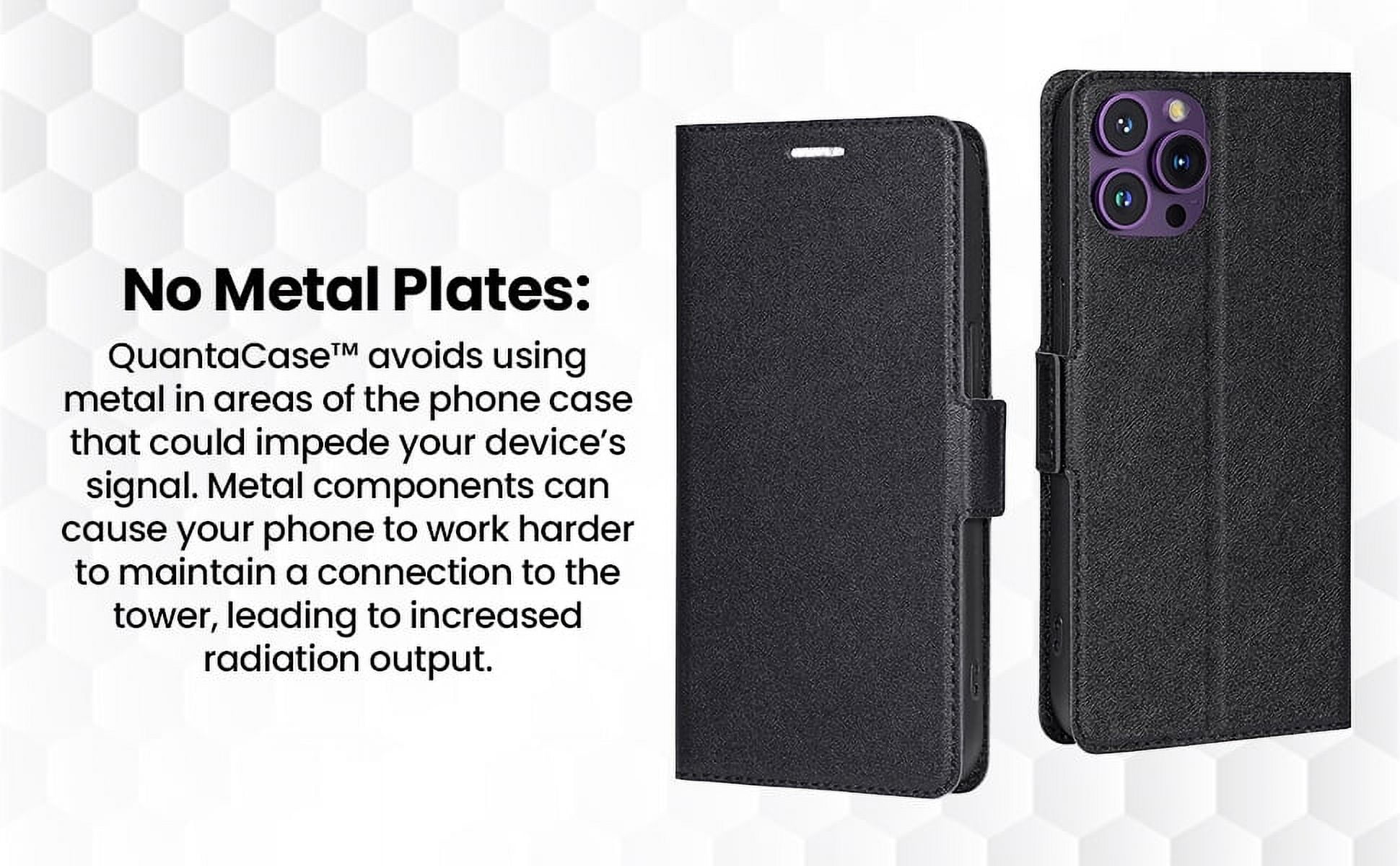

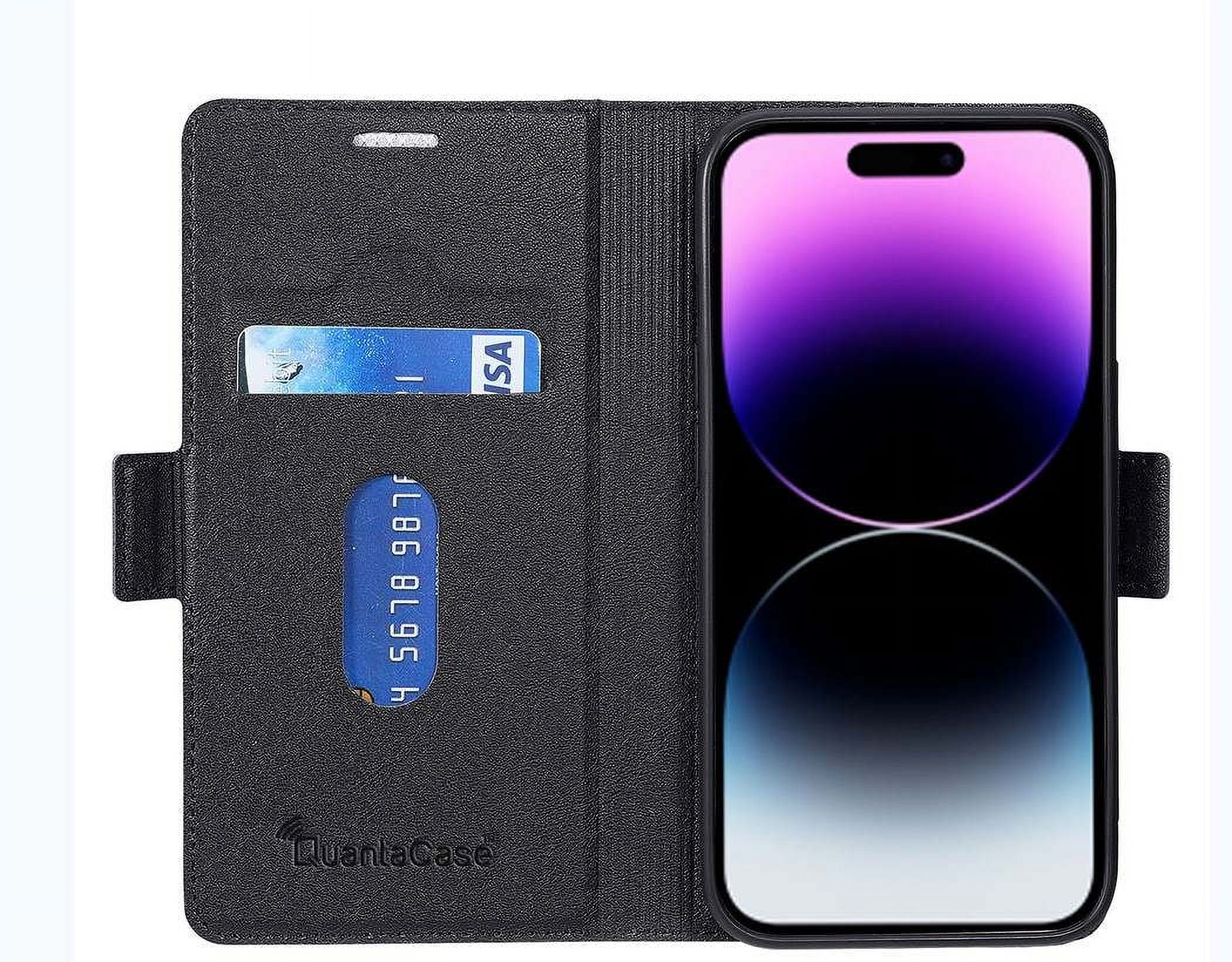
No bulk, no gaps—just honest protection.
Beyond the Case: RF Safe’s Roadmap to a Safer Wireless World
QuantaCase isn’t the endgame; it’s a gateway to RF Safe’s movement. Since 1998, they’ve built the world’s largest SAR database, with tools like the RF Safe Score for comparing devices. Their roadmap? Innovate open-source tech, like Coates’ patented interferometric antennas that influenced FCC rules by nulling radiation toward users. And his zero-SAR network using Far-UVC light? It transmits data while sterilizing spaces—safe, skin-impenetrable.
Advocacy pulses through: Pushing to restart NTP research, end “regulatory capture” at the FCC, and update 1996 guidelines ignoring non-thermal effects. They’ve rallied for reclassifying RF risks, citing NTP/Ramazzini as proof we need biology-informed limits.
Enter Li-Fi: RF Safe champions this visible light communication as Wi-Fi’s successor. Unlike RF-based Wi-Fi, which penetrates walls (risking interception and EM exposure), Li-Fi uses LED light—faster (up to 100x), secure (line-of-sight only), and zero RF interference. It slashes potential health risks by ditching microwaves for harmless light, energy-efficient and immune to EM jamming.
Visualize it:
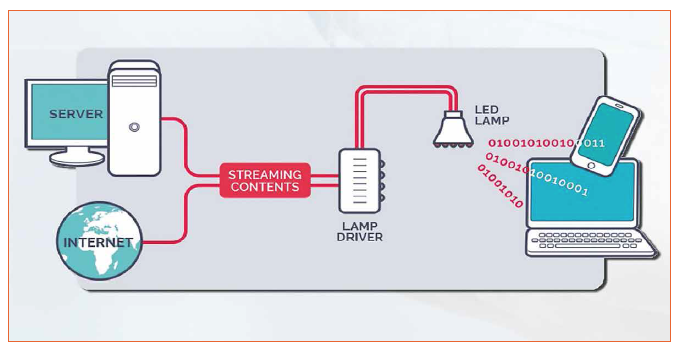
This ties everything: Products fund advocacy, policy pushes regulation, innovations like Li-Fi pave safer paths. Proceeds from QuantaCase? They fuel this ecosystem.
Joining the Light: Your Role in the Movement
As I wrap this, think back to that father in 1995. RF Safe isn’t selling cases—it’s sparking change. In 2026, with RF debates raging, QuantaCase is your entry point: Honest, effective, #1 by design. But the real power? Adopting the mindset—distance over dependence, advocacy over apathy. Visit rfsafe.com, grab a case, dive into their SAR tools, support FCC reforms. Because in this wireless world, truth isn’t optional—it’s our shield. Let’s illuminate the shadows together.