
QuantaDose Press Releases
WE TRADED HIGH-FIDELITY WIRELESS (5G) FOR LOW-FIDELITY BIOLOGY (SICK CHILDREN)
Apr
America’s wireless safety crisis did not begin with 5G. It began when a narrow thermal-only hazard model was turned into federal policy, then frozen in place by law long after the science moved beyond it. The core public-health record is already damning. Federal law assigns HHS a radiation-control duty: the Secretary “shall establish and carry out” an electronic product radiation control program designed to protect public health and safety from electronic product radiation. Yet Section 704 of the Telecommunications Act bars state and local governments from denying wireless facilities on the basis of RF environmental effects when those facilities comply with FCC rules. Then, in 2019, the FCC declined to reopen its RF rulemaking and reaffirmed its current standards. In 2021, the D.C. Circuit held that order arbitrary and capricious for failing to adequately address record evidence on non-cancer effects, children, long-term exposure, pulsation/modulation, technological changes since 1996, and environmental harms. That is not a stable safety framework. It is a legally rebuked framework still leaning on an outdated premise.
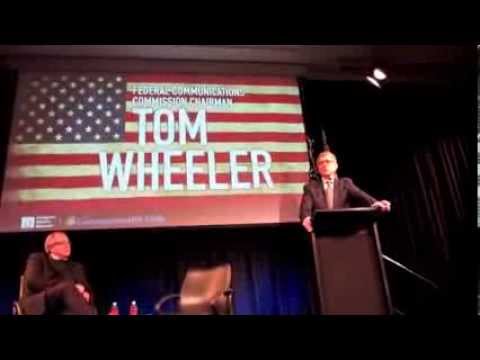
Tom Wheeler is the clearest human symbol of that architecture. FCC’s own biography says Wheeler served as president and CEO of CTIA from 1992 to 2004; the Wireless History Foundation says he “united the industry” behind both the 1993 budget act and the 1996 Telecommunications Act. During the Obama years, Wheeler was also a major fundraiser: contemporaneous reporting says he raised between $200,000 and $500,000 for Obama in 2008 and more than $500,000 in 2012. Obama’s transition-team records show Wheeler then joined the Agency Review Working Group for science, technology, space, and arts agencies before later becoming FCC chairman. That is the donor-to-lobbyist-to-regulator pipeline in plain view. The public record does not establish a criminal bribe. It does establish a conflict-ridden revolving door that any serious public-health critique can call captured without exaggeration.
Section 704 did the wireless industry’s most important legal work. The statute says that no state or local government may regulate the placement, construction, or modification of personal wireless facilities “on the basis of the environmental effects of radio frequency emissions” if the facilities comply with FCC rules. In plain English, local governments can be forced to accept towers near homes, schools, and playgrounds even when communities have health concerns, so long as the operator says the facility is FCC-compliant. That preemption is not a side issue. It is the mechanism that converted an old federal exposure model into a local-democracy gag rule.
The public-health duty never disappeared. FDA still says it is responsible for regulating radiation-emitting electronic products and that its goal is to protect the public from hazardous and unnecessary exposure to radiation from those products. The legal basis is not obscure. It is 21 U.S.C. § 360ii and the broader radiation-control framework originally enacted as Public Law 90-602. That means the institutional story was never supposed to be “the FCC sets a heat limit and the case is closed.” The health duty belongs inside HHS/FDA’s lane whether or not the FCC handles licensing and spectrum engineering.
The most destructive myth in this history is that lawmakers in 1996 had only a crude heating problem in front of them. That is not what the pre-1996 record shows. The uploaded historical spine collects Allan Frey’s human auditory-response work, Adey/Bawin calcium-signaling findings, Blackman’s modulation-window data, Dutta’s calcium-efflux work in human neuroblastoma cells, Chou and Guy’s long-term rat study, Lai’s neurochemical and neurobehavioral work, and Lai-Singh’s DNA-break papers. The force of that record is not that every single paper was decisive alone. The force of that record is that by 1996 the literature already contained sub-thermal sensory interaction, modulation sensitivity, calcium-signaling effects, nonlinear windows, neurobehavioral change, chronic animal exposure work, and DNA-damage findings. The idea that Congress in 1996 only had to think about heat is not historically credible.
The George Carlo episode shows what happened when science began to threaten the marketing story. The Nation reported that Wheeler, as CTIA president, handpicked Carlo to run the industry-financed Wireless Technology Research program. The same investigation reported that the program’s eventual budget reached $28.5 million and that the last time Wheeler and Carlo met face-to-face, Wheeler had security guards escort Carlo off the premises. That is not the profile of a field insulated from industrial pressure. It is the profile of a field in which research, public relations, and regulatory strategy were entangled from the start.
Wheeler later said the governing philosophy out loud. In his 2016 5G speech, he said: “Rule number one is that the technology should drive the policy rather than the policy drive the technology.” The same speech also included the line “We won’t wait for the standards.” That is not how toxicology, environmental health, or child-protective policy normally works. It is a deployment-first doctrine: build first, normalize first, and force health governance to chase the rollout after the fact.
The FCC’s 2019 RF order turned that doctrine into explicit agency posture. The Commission said it found “no appropriate basis” to initiate a rulemaking to reevaluate the limits and concluded that the “best available evidence” supported maintaining the current standards. It relied in part on FDA’s 2019 position that “no changes to the current standards are warranted at this time.” That is the order the D.C. Circuit later struck back at.
The 2021 court opinion is the bridge between the old political story and the present scientific crisis. The D.C. Circuit held that the FCC’s order was arbitrary and capricious in failing to respond to record evidence that RF radiation below current limits may cause non-cancer harms. The court said that failure undermined the FCC’s conclusions as they relate to children, long-term exposure, RF pulsation or modulation, technological developments since 1996, and environmental harm. It also said the FCC’s reliance on conclusory FDA statements was not the reasoned explanation administrative law requires. This was not a procedural slap on the wrist. It was a finding that the agency had failed to explain itself on exactly the categories critics say the thermal-only model misses.
The newer science now tightens the vice. NIEHS says the National Toxicology Program found clear evidence of malignant heart schwannomas in male rats exposed to cellphone-type RF, with some evidence for malignant gliomas and adrenal tumors. The 2025 animal-cancer systematic review says the evidence is high certainty for malignant heart schwannomas and gliomas in male rats. The 2025 male-fertility corrigendum upgraded reduced pregnancy rate after male RF exposure to high certainty in experimental animals. Then the 2026 Melnick–Moskowitz paper stated that recent WHO-commissioned reviews had concluded with high certainty that RF-EMF increases cancer risk and reduces male fertility in experimental animals, and it concluded that current public limits are 15- to 900-fold higher than the paper’s cancer-risk-based estimates and 8- to 24-fold higher than levels protective of male reproductive health. That is not a literature with no signal. It is a literature in which the strongest signals are now colliding head-on with the 1996 heat model.
That is why the low-fidelity-biology frame matters more than the old “one disease, one cause” argument. The uploaded RF Safe essays are right to insist that this is not just a cancer debate. The stronger mechanistic story is upstream: voltage sensing, ion-channel timing, calcium influx, oxidative balance, mitochondrial stress, and signal coordination across tissues. Once the disturbance begins that high in the control hierarchy, the downstream failures do not have to collapse into one neat endpoint. They can surface as fertility loss, developmental instability, metabolic drift, immune dysregulation, cognitive effects, cancer, or some mixture of all of them. That is why the most serious formulation is not “RF causes exactly one disease.” It is that chronic RF burden can degrade the fidelity of biology itself.
The S4–Mito–Spin shorthand is useful because it names three levels of that upstream map. S4 points to the voltage-sensor machinery of ion channels: search results and review literature describe the S4 segment as the charged transmembrane element that responds to changes in membrane potential and helps trigger channel opening. Mito points to mitochondria, because Panagopoulos’s 2025 review argues that ion-channel dysfunction can drive ROS overproduction and oxidative stress through the mitochondrial electron-transport chain, NOX systems, NOS systems, and related pathways. Spin points to spin-sensitive chemistry, especially radical-pair processes, because modern spin-chemistry reviews describe the radical-pair mechanism as a plausible route by which weak fields can bias reaction outcomes without bulk heating. Put together, S4–Mito–Spin says the injury begins at voltage sensing, is amplified by calcium and mitochondrial redox, and may be further shaped by spin-sensitive chemistry.
FDA’s own device record makes that framework harder to dismiss as speculation. FDA’s page for the TheraBionic P1 describes an amplitude-modulated RF electromagnetic-field device approved for advanced hepatocellular carcinoma. FDA’s Summary of Safety and Probable Benefit says the device should not be used in patients receiving calcium-channel blockers unless treatment is modified, and the mechanism literature cited in policy documents identifies Ca_v3.2 T-type voltage-gated calcium channels and calcium influx as part of the pathway. That does not prove a cellphone or tower is functionally identical to a therapeutic device. It destroys the claim that non-thermal RF interaction with voltage sensing and calcium signaling is impossible. The FDA’s own approval record now sits on the opposite side of that old dogma.
Children expose the absurdity of the current framework even more sharply. The uploaded 18-study packet includes the 2018 dosimetry paper showing that children can absorb two- to three-fold higher localized doses in parts of the brain and eye than adults. The D.C. Circuit specifically faulted the FCC for failing to give a reasoned explanation regarding the effects of RF on children. The result is grotesque: an adult-phantom compliance model is still being used inside a legal regime that blocks communities from citing health effects when towers go up near schools. That is not a child-centered safety system. It is an infrastructure-centered safety system.
The FDA message is now openly contradictory. Reuters reported in January 2026 that HHS was launching a new cellphone-radiation study and quoted HHS spokesman Andrew Nixon saying the FDA had removed webpages with “old conclusions” about cellphone radiation. Yet FDA’s live cellphone page, still marked current as of 05/13/2021, continues to say that the “weight of scientific evidence” has not linked cellphone RF with health problems and that the evidence does not show danger “including children and teenagers.” That is not a coherent rebuttal to the current record. It is split federal messaging: legacy reassurance still live on one page, active federal re-examination on another.
WHO is no longer the controlling American public-health authority this argument must treat as dispositive. HHS announced on January 22, 2026 that the United States had completed its withdrawal from WHO. But even setting that aside, IARC’s own 2025–2029 priority report elevated radiofrequency electromagnetic fields to high priority for reevaluation because of new human cancer and animal cancer evidence. So even the WHO-linked review pipeline moved toward stronger concern, not weaker concern.
ICNIRP’s current position makes the disagreement plain. Its FAQ says ICNIRP considers all potential adverse effects, but its restrictions are based on thermal effects because it believes those are the lowest exposure levels that can cause adverse health effects and will therefore protect against any other effects. The same FAQ says the NTP and Ramazzini studies did not show carcinogenicity requiring cancer-specific restrictions. That is exactly the thermal-first worldview critics say is no longer tenable once the animal cancer, fertility, mechanistic, and risk-modeling literatures are read together.
The Japanese and Korean 4 W/kg studies do not rescue the old limits. What they show is narrower: the Korean paper reported that long-term CDMA-modulated 900 MHz RF was neither carcinogenic nor genotoxic at 4 W/kg in male rats, and public summaries note that the Japanese and Korean projects were partial replications using a single exposure level of 4 W/kg. That matters because a one-level study cannot erase a multilevel bioassay when NTP’s own peer-review record explicitly discussed strong response at the lower doses and no response at the higher doses, and stated that lower-dose responses cannot be ignored when higher-dose responses saturate. The strongest critique of the Japan/Korea results is not that they are worthless. It is that they test one boundary layer already inside the NTP landscape, not the full nonlinear question.
That is why the deepest, most defensible formulation of the case is no longer “find one disease and pin everything on RF.” The stronger formulation is this: the present U.S. RF regime is still rooted in a 1996 thermal premise; Section 704 locked that premise into local preemption; HHS/FDA’s statutory radiation-control duty was never meaningfully executed at the level Congress envisioned; the FCC’s 2019 defense of the regime was struck down as arbitrary and capricious on the very health categories at issue; and the mechanistic, animal-cancer, male-fertility, child-dosimetry, and risk-assessment literatures now converge on a conclusion the old framework was not built to face — RF exposure below the heating threshold is not biologically silent. Once that is true, thermal compliance stops being a full safety model. It becomes a partial model that left children living inside a low-fidelity developmental environment.
Historical source spine — full clickable links
This historical block is the source spine behind the pre-1996 argument in the uploaded RF Safe draft.
1. Allan H. Frey, 1962 — Human auditory system response to modulated electromagnetic energy
https://journals.physiology.org/doi/abs/10.1152/jappl.1962.17.4.689
https://journals.physiology.org/doi/pdf/10.1152/jappl.1962.17.4.689
https://mriquestions.com/uploads/3/4/5/7/34572113/auditory_frey_rf_hearing_jappl.1962.17.4.689.pdf
2. Bawin, Kaczmarek, Adey, 1975 — Effects of modulated VHF fields on the central nervous system
https://pubmed.ncbi.nlm.nih.gov/1054258/
https://nyaspubs.onlinelibrary.wiley.com/doi/10.1111/j.1749-6632.1975.tb35984.x
3. Bawin & Adey, 1976 — Sensitivity of calcium binding in cerebral tissue to weak environmental electric fields oscillating at low frequency
https://www.pnas.org/doi/10.1073/pnas.73.6.1999
https://pubmed.ncbi.nlm.nih.gov/1064869/
https://www.pnas.org/doi/pdf/10.1073/pnas.73.6.1999
4. Blackman et al., 1980 — Induction of calcium-ion efflux from brain tissue by radiofrequency radiation
https://pubmed.ncbi.nlm.nih.gov/7284014/
https://agupubs.onlinelibrary.wiley.com/doi/10.1029/RS014i06Sp00093
5. Dutta et al., 1983/1984 — Microwave radiation-induced calcium ion efflux from human neuroblastoma cells in culture
https://www.osti.gov/biblio/7188364
https://doi.org/10.1002/bem.2250050108
https://pubmed.ncbi.nlm.nih.gov/6712751/
6. Lai et al., 1987 and 1989 — low-level microwave effects on central cholinergic activity
https://pubmed.ncbi.nlm.nih.gov/3794708/
https://pubmed.ncbi.nlm.nih.gov/2712849/
https://www.osti.gov/biblio/6065111
7. Lai, Horita, Guy, 1994 — Microwave irradiation affects radial-arm maze performance in the rat
https://pubmed.ncbi.nlm.nih.gov/8024608/
https://onlinelibrary.wiley.com/doi/10.1002/bem.2250150202
8. Chou, Guy et al., 1992 — Long-term, low-level microwave irradiation of rats
https://pubmed.ncbi.nlm.nih.gov/1482413/
https://onlinelibrary.wiley.com/doi/10.1002/bem.2250130605
9. Lai & Singh, 1995 — Acute low-intensity microwave exposure increases DNA single-strand breaks in rat brain cells
https://pubmed.ncbi.nlm.nih.gov/7677797/
https://onlinelibrary.wiley.com/doi/10.1002/bem.2250160309
10. Lai & Singh, 1996 — Single- and double-strand DNA breaks in rat brain cells after acute exposure to radiofrequency electromagnetic radiation
https://pubmed.ncbi.nlm.nih.gov/8627134/
https://doi.org/10.1080/095530096145814
11. Robert O. Becker — public warning, Project Seafarer, and blocked funding
https://www.robertobecker.net/PDFs/PL16.pdf
https://robertobecker.net/research/regeneration/
https://www.newyorker.com/magazine/1989/06/12/the-hazards-of-electromagnetic-fields-i-power-lines
12. George Carlo / WTR, 1995–1999
https://www.thenation.com/article/archive/how-big-wireless-made-us-think-that-cell-phones-are-safe-a-special-investigation/
https://documents.dps.ny.gov/public/Common/ViewDoc.aspx?DocRefId=%7BDB856452-DFEB-4289-A7DC-3D0856698A7D%7D
https://ntp.niehs.nih.gov/sites/default/files/ntp/about_ntp/trpanel/2018/march/publiccomm/carlo20180312.pdf
https://link.springer.com/content/pdf/10.1007%2Fb112273.pdf
https://www.goaegis.com/articles/gcarlo_100799.html
13. Motorola’s “war-gaming” of the Lai-Singh results
https://magazine.washington.edu/feature/uw-researchers-wake-up-call-on-cellphone-radiation-is-finally-getting-heard/
https://seattlemag.com/food-and-culture/uw-scientist-henry-lai-makes-waves-cell-phone-industry/
https://mronline.org/wp-content/uploads/2020/05/cell-phone-radiation-war-gaming-memo.pdf
14. Section 704, 1996 — the legal lock-in
https://www.law.cornell.edu/uscode/text/47/332
https://www.govinfo.gov/link/uscode/47/332
15. Tom Wheeler, 2016 — “technology should drive the policy”
https://transition.fcc.gov/Daily_Releases/Daily_Business/2016/db0620/DOC-339920A1.pdf
https://www.press.org/sites/default/files/20160620_wheeler.pdf
Eighteen-study science spine — full clickable links
This block is the source spine behind the recent-science section and comes from the uploaded 18-study packet.
1. Exposure limits to radiofrequency electromagnetic fields do not account for cancer risk or reproductive toxicity assessed from data in experimental animals
https://www.rfsafe.org/mel/paper.php?id=6800
https://link.springer.com/article/10.1186/s12940-026-01288-6
2. The INTERPHONE study: design, epidemiological methods, and description of the study population
https://www.rfsafe.org/mel/paper.php?id=6784
https://pubmed.ncbi.nlm.nih.gov/17636416/
3. Danish Cancer Registry 2023 Report Reveals Significant Population-Level Increase in Brain and Central Nervous System Tumors
https://www.rfsafe.org/mel/paper.php?id=6783
https://www.rfsafe.com/wp-content/uploads/2024/10/Nye-kraefttilfaelde-i-Danmark-2023.pdf
4. Extremely low frequency electromagnetic fields and cancer: How source of funding affects results
https://www.rfsafe.org/mel/paper.php?id=1725
https://www.ncbi.nlm.nih.gov/pubmed/31476684
5. Is Cellphone Carrying Below the Waist Contributing to the Rapid Rise in Early-Onset Colorectal Cancer?
https://www.rfsafe.org/mel/paper.php?id=2426
https://www.rfsafe.org/mel/story.php?slug=is-cellphone-carrying-below-the-waist-exposure-to-non-ionizing-radiation-contributing-to-the-rapid-rise-in-early-onset-colorectal-cancer
https://www.researchgate.net/publication/383147719_Is_Cellphone_Carrying_Below_the_Waist_Exposure_to_Non-Ionizing_Radiation_Contributing_to_the_Rapid_Rise_in_Early-Onset_Colorectal_Cancer
6. U.S. policy on wireless technologies and public health protection: regulatory gaps and proposed reforms
https://www.rfsafe.org/mel/paper.php?id=2442
https://www.rfsafe.org/mel/story.php?slug=u-s-policy-on-wireless-technologies-and-public-health-protection-regulatory-gaps-and-proposed-reforms-p2442
https://www.frontiersin.org/journals/public-health/articles/10.3389/fpubh.2025.1677583/full
7. Flora and fauna: how nonhuman species interact with natural and man-made EMF at ecosystem levels and public policy recommendations
https://www.rfsafe.org/mel/paper.php?id=2475
https://www.rfsafe.org/mel/story.php?slug=flora-and-fauna-how-nonhuman-species-interact-with-natural-and-man-made-emf-at-ecosystem-levels-and-public-policy-recommendations-p2475
https://www.frontiersin.org/journals/public-health/articles/10.3389/fpubh.2025.1693873/full
8. Absorption of wireless radiation in the child versus adult brain and eye from cell phone conversation or virtual reality
https://www.rfsafe.org/mel/paper.php?id=2083
https://www.sciencedirect.com/science/article/pii/S0013935118302561
9. Source of Funding and Results of Studies of Health Effects of Mobile Phone Use
https://www.rfsafe.org/mel/paper.php?id=6717
https://pubmed.ncbi.nlm.nih.gov/17366811/
10. Oxidative mechanisms of biological activity of low-intensity radiofrequency radiation
https://www.rfsafe.org/mel/paper.php?id=6722
https://pubmed.ncbi.nlm.nih.gov/26151230/
11. Oxidative Stress Induced by Wireless Communication Electromagnetic Fields
https://www.rfsafe.org/mel/paper.php?id=6759
https://doi.org/10.1201/9781003201052-6
12. A comprehensive mechanism of biological and health effects of anthropogenic extremely low frequency and wireless communication electromagnetic fields
https://www.rfsafe.org/mel/paper.php?id=2627
https://www.rfsafe.org/mel/story.php?slug=effects-of-polarized-coherent-microwaves-modulated-at-extremely-low-frequencies
https://pubmed.ncbi.nlm.nih.gov/40547468/
13. Report of final results regarding brain and heart tumors in Sprague-Dawley rats exposed from prenatal life until natural death to a 1.8 GHz GSM base station environmental emission
https://www.rfsafe.org/mel/paper.php?id=2145
https://www.ncbi.nlm.nih.gov/pubmed/29530389
14. NTP Technical Report on the Toxicology and Carcinogenesis Studies: GSM- and CDMA-modulated Cell Phone RFR, NTP TR 595
https://www.rfsafe.org/mel/paper.php?id=6756
https://www.rfsafe.org/mel/story.php?slug=ntp-technical-report-on-the-toxicology-and-carcinogenesis-studies-gsm-and-cdma-modulated-cell-phone-rfr-ntp-tr-595
https://ntp.niehs.nih.gov/sites/default/files/ntp/htdocs/lt_rpts/tr595_508.pdf
15. Genetic profiling of rat gliomas and cardiac schwannomas from life-time radiofrequency radiation exposure study using a targeted next-generation sequencing gene panel
https://www.rfsafe.org/mel/paper.php?id=237
https://journals.plos.org/plosone/article?id=10.1371/journal.pone.0296699
16. The association of widely used electromagnetic waves exposure and pregnancy and birth outcomes in Yazd women: a cohort study
https://www.rfsafe.org/mel/paper.php?id=2660
https://www.rfsafe.org/mel/story.php?slug=the-association-of-widely-used-electromagnetic-waves-exposure-and-pregnancy-and-birth-outcomes-in-yazd-women-a-cohort-study
https://bmcpregnancychildbirth.biomedcentral.com/articles/10.1186/s12884-025-07512-4
17. Effects of radiofrequency electromagnetic field exposure on cancer in laboratory animal studies, a systematic review
https://www.rfsafe.org/mel/paper.php?id=6755
https://www.rfsafe.org/mel/story.php?slug=effects-of-radiofrequency-electromagnetic-field-exposure-on-cancer-in-laboratory-animal-studies-a-systematic-review-p6755
https://pubmed.ncbi.nlm.nih.gov/40339346/
18. Corrigendum to “Effects of radiofrequency electromagnetic field (RF-EMF) exposure on male fertility”
https://www.rfsafe.org/mel/paper.php?id=5908
https://www.rfsafe.org/mel/story.php?slug=corrigendum-to-effects-of-radiofrequency-electromagnetic-field-rf-emf-exposure-on-male-fertility-a-systematic-review-of-experimental-studies-on-non-human-mammal
https://pubmed.ncbi.nlm.nih.gov/40268655/